Saturday, June 25, 2016

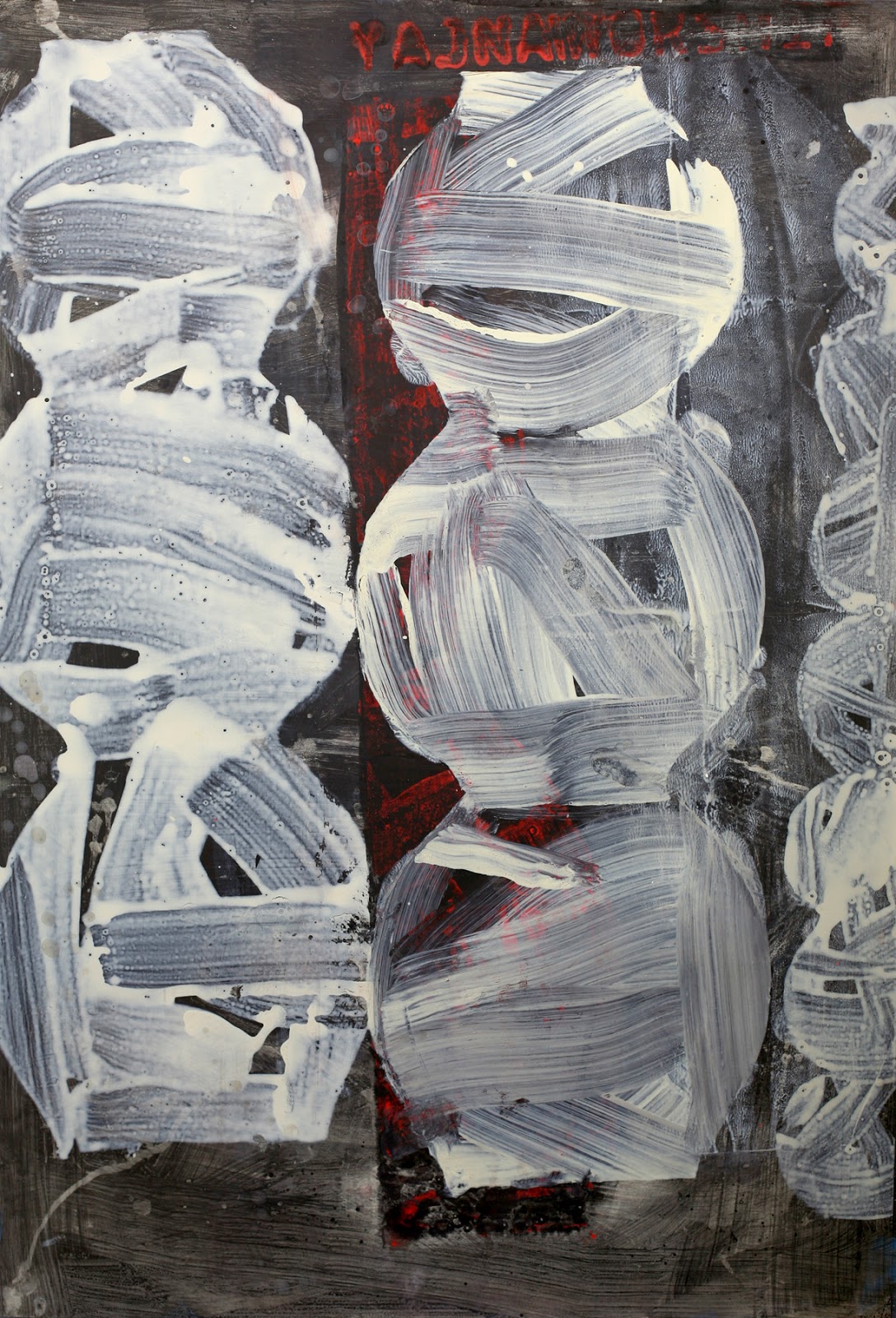
More Works on Paper | Winter Spring 2016

Counting Column, acrylic on paper, 37″ x 25.25″


Double Double, acrylic on paper, 37″ x 25.25″


Golden Era, acrylic on paper, 37″ x 25.25″


Potter, acrylic on paper, 37″ x 25.25″


Theater Piece, acrylic on paper, 37″ x 25.25″


Triplo, acrylic on paper, 37″ x 25.25″


Vajna, acrylic on paper, 37″ x 25.25″


Mbato, acrylic on paper, 37″ x 25.25″


Allure 02, acrylic on paper, 37″ x 25.25″– 2016, Ward Schumaker


Allure 01, acrylic on paper, 37″ x 25.25″– 2016, Ward Schumaker


Cyrk, acrylic on paper, 37″ x 25.25″– 2016, Ward Schumaker

Tuesday, June 14, 2016

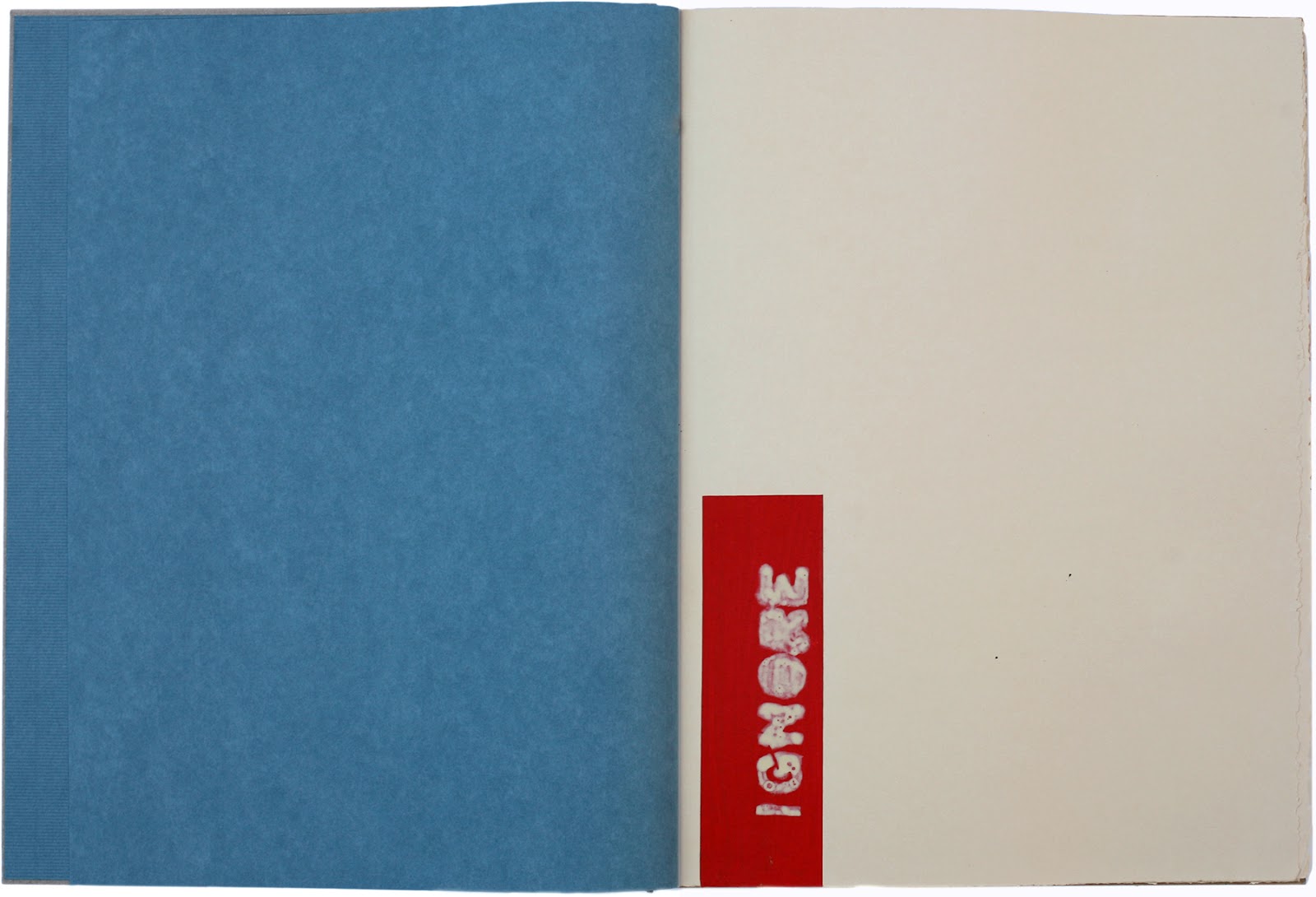
Stasis and Oatmeal

Stasis and Oatmeal is a hand-painted book, created in an edition of five (plus one artist copy), page size 11" x 15" (opens to 15" x 22"), 32 pages plus cover, cover is hot foil stamped, painted on Brown Stonehenge, created in 2016, with a binding by John Demerritt.


Thursday, June 9, 2016

Works on Paper | Winter-Spring 2016

Theater Piece 01, acrylic on paper, 35" x 25"


Theater Piece 02, acrylic on paper, 39.5" x 25"


Bodhisattvas All, acrylic on paper, 39.5" x 26"


Golemetti T-F, acrylic on paper. 37" x 25"


Table Flower 02, 30.5" x 22.5"


Flower on Black, acrylic on paper, 37" x 25"


North Beach 02, acrylic on paper, 29.5" x 20"


27 October 1938, acrylic on paper, 33.5" x 25"


Awaken, acrylic on paper, 37" x 25.25"


Golemetti on Brown, acrylic on paper, 30" x 22.5"


Monday, May 23, 2016

The Boy Who Drew Dirty | Part One: A Paperboy Hero | Chapter Eight

Before reading this, please go to chapter one:  here.
Eight


“When we get there,” my helpful brother warns, “I don’t want you hanging around, asking stupid questions. Stand with the kids from your class, near the piano. And I dont want you talking to any of the girls I dance with––or talking to yourself. Got it?”
            I nod my head as Howard and I rush through the park, around the lagoon, up the hill to the Pavilion and Mr. Longviews Saturday Night Dance Lessons. Most kids have been going for over a year but this is the first time my parents would let me, and only if I promise to stay near Howard. Which, of course, he does not agree to after weve escaped the house.
            “But do I look okay?” I ask. Im wearing a pink shirt, a charcoal sport coat with flecks, and a really thin tie (Uncle Charlie gave it to Dad, who wouldnt wear it). Howard rolls his eyes.
            “What, is my tie crooked?
            “No. Its just...it’s dumb,” he smirks. Then he adds, “Aw, shut up, you look fine. No ones going to pay any attention to you, anyway.”
            We get to the Pavilion faster than ever and everyone in the worlds already there: the Drexels, the Trainor Twins, Bubbles Feiffer and his brother Chris, all the popular guys and the baseball team––even Jules Steinberg––and whod have thought his parents would let him, what with his asthma? And there are girls. Girls with pony-tails or hair down to the waist; with poodle-cuts and dresses to match; girls in bobby socks and hoop skirts; girls holding on to each other, giggling, or standing in groups, whispering behind cupped hands. Or most pitiful of all, standing alone but smiling: Judy Forneau. Finally, in the far corner, a group of extra neat girls go through a stack of 45 rpm records; theyre wearing make-up, tight skirts and pearl necklaces, Rose Anne Jankowski in the center, looking best of all. Colored lanterns are draped from the ceiling, kids are drinking Cokes, theres music and noise and laughter. Im confused but excited and suddenly I realize: life starts here. But before I can get my bearings, the teacher and his wife glide into the center of the shining, waxed floor.
            “Tonight,” he announces, “is made for the Cha-cha!” Some guys in the back yell: “We wanna jitter-bug!” The teacher holds up his hand for silence, but the guys continue yelling so he pulls up his sleeve and stares at his watch, eyebrows arched. “We can wait all night if necessary,” he says, tapping his foot. The noise continues until my brother barks, “Shut-up, guys!” Then the teacher huffs, “I don’t know whats wrong with Omaha. We were in Denver last week and there the Cha-cha is the thing! Isnt that right, Mrs. Longview?” He turns to his wife, who nods her pretty (if tiny) head in agreement.
            And the lesson starts.  “Left foot over, right foot back,” the teacher commands and soon everyone is practicing the steps of the Cha-cha to Tea for Two. Then he cries out, “Couples!” and everyone grabs a partner. Even Judy gets one. But I look around and there's no one left, so I just stand there, next to the record player; no one notices, not even Mr. Longview––and shouldn't he be watching out for this kind of thing? But after what seems like hours, Mr. Longview finally announces, “Intermission, fifteen minutes, then back for the Free-Style Contest with prizes!”
            And everyone files out, into the dark summer night waiting for us beneath the streetlights. Guys form groups on the sidewalk, girls talk on the porch. Me, Ive had to promise to stay away from Howard's group and Dwayne-Bob's already standing with them, so I duck under the main steps, behind the spruce trees, and practice the cha-cha in the dark––until a couple hoodlum types slip in to have a cigarette, giving me bad looks as a warning me not to turn them in.
            Intermission lasts forever.

*     *     *

            Free-style means dancing any way you want and everyone seems to do just that the rest of the night. Some do the slow-dance no matter the beat and others swing each other hard––which Mr. Longview tries to stop. No one does the cha-cha. I start to ask Joyce Pritchard but Eddy Palmer gets there first, so I just stand by the piano and watch the others: like Rose Anne Jankowski­­­, who never misses a dance and seems to have a different partner for every record; and surprisingly, Judy Forneau, who is suddenly dancing every dance with a high-schooler. But then the rear door (next to me) opens a crack and in sneaks Molly, who puts her hand on my shoulder and whispers, “Wanna dance?” She touches my arm and explains, “I didnt have the dollar to come through the front.” We dance together the rest of the evening and she doesnt seem to mind that Im not very good and she never makes fun of me when I step on her feet and she never catches me looking over her shoulder searching for Rose Anne.
             Which means the evening is turning out alright, after all––until the contest starts. Then it goes wrong and its Howard's fault: for the contest he chooses Rose Anne as his partner and she accepts! Mr. Longview puts on High School Confidential and Howard and Rose Anne start doing the Dirty Chicken––they rock back and forth on their heels, hands on their hips, and peck at each other. People form a circle, clap and cheer, and Howard goes wild. At one point he throws off his sport coat and tears off his tie; sweats flying from his forehead and his shirts sopping wet! Howards my brother but I didnt know he could dance like this. Or would. Their dancing wins them first prize and Howard walks away with a portable radio and Rose Anne gets a tiara. She looks really dumb in it.
            After the dance, Mollys picked up by her brothers and the thug who drove the black Chevy convertible to the Talent Show. As it speeds away, she turns and waves good-bye. She looks so small in the backseat, surrounded by those big, tough, older guys. But mainly Im thinking about my brother: howd he get Rose Anne to dance with him?

*     *     *

            So as we approach our house, I hurry ahead and announce, “Howard won a radio for doing the Dirty Chicken!”
            “What?” my mother asks, as she dries her hands on a dishtowel. Howard follows me through the door and gives me a look. But Mom has a way of ignoring things she doesnt want to hear. “You won a radio! Wonderful, let me see.” Howard holds up his prize. “Coral! Thats a lovely color. Turn it on, lets hear.”
            “Its a really cheap radio and the batteries dont even come with it,” I interrupt, before Howard can say anything.
            “Let your brother talk,” my mom warns. “Howard, who was your dance partner?”
            “Just this girl I know, Rose Anne.” I look at him, hate in my heart. “Shes the one that asked me to C.Y.O.”
            “The Catholic Youth Organization?”
            “I told her I couldnt go.”
             Mom smiles. “Well, would you two like some ice cream to celebrate?”
            “Can we have fruit cocktail in it?” Howard asks. 
            Mom takes a can from the cupboard. “Oh, I almost forgot,” she says, pulling an envelope from her apron pocket. “Howards not the only winner in this family tonight.” She hands it to me. “Sorry I opened it. I didnt notice it was for you.”
            The return address leaps out at me: Mayflower Cleaners. 
            “Did I win the bike?” I ask. “Really?” I tear the letter from the already-opened envelope but Howard pulls it out of my hand. 
            “You won a bike? For that stupid coloring contest?”
            “It wasnt for coloring,” I complain. “That was just the first part.”
            Mom gets dry-cleaning done at The Mayflower––they use cardboard stiffeners to back the shirts they clean. One day Dad threw me one of the stiffeners and it had a line drawing printed on it you were supposed to color. It was a cinch! I became one of twenty-five winners, each of which won ten dollars worth of dry-cleaning, plus a chance for an even bigger prize: an English racer. To win, you had to create a picture from scratch, illustrating the theme, Cleanliness in America. 
            “I drew a picture of George Washington helping his mom clean cherry stains out of his shirt,” I tell Howard, feeling exceptionally good about telling him. “And no matter what you might think I deserve, Ive won.”  I pull my letter from his hands and read it. “Dang! You gotta go to South Omaha to get the bike. How do I get way over there?”
            “Your dad’ll drive you,” my mother says. “Well all go together.”
            “Im not going,” Howard grouches, and he gets up, noisily throwing his dish into the sink. “Everyone thinks youre such a great artist,” he grumbles, as he grabs his radio and leaves for his room. Then he adds, quietly, so Mom cant hear, “But Id like to know what theyd think of your drawings if they talked to Jeremy Steels mom!”

*     *     *

            I get into bed, pull down my shorts and Im touching myself, thinking I should be happy, I just won an English racer! But seeing Howard with Rose Anne has ruined that. Im also worried about him bringing up Mrs. Steel in front of Mom. But I guess nothing's ever easy, certainly not girls, and not even drawing.
            Theres nothing I like better than drawing––three-eyed cars, pretend maps, mazes, anything––because when I draw, people pay attention. Ive appeared in Highlights, I've done the class mural, and I get extra credit in science because I make the best drawings of drosophilae­. But sometimes drawing has gotten me in trouble. Even when I wasnt the one whod actually done them. Take Mrs. Steel. 
            Me, I can draw from scratch better than my brother Cliff, but he could always trace better. One of the things he could trace was girlsbodies. Hed use the comics: Wolf Gal from Lil Abner or any girl from Terry and the Pirates. Placing a piece of Dads drafting tissue on top, hed copy them––minus the clothes. Anyway, I told Jeremy Steel and some other guys about the drawings, acting as if Id done them, and they said they wanted some. I was only seven and I dont know how I got Cliff to give them to me, but I did. I took them over to Jeremys house and thought: Im gonna be so popular! And I was. At first. But a couple days later, the guys said they couldnt play with me because Jeremys mother had found the drawings and said I was nasty. “We don’t like that kind of stuff,” Jeremy said. And all his friends, standing behind him, agreed. I said, “But you asked for them!” I couldnt admit I hadnt actually drawn the pictures because earlier Id lied. I turned and walked home, worrying first what would happen if Mrs. Steel told my parents and after that, that I was going to be alone the rest of my life­­.
            Because this was not the first time this kind of thing had happened.
            The first was a long time ago but Ill never ever be able to forget it. It was when Dad sent me to live with my grandparents in the country, after Clarence got polio. I was only five. On the farm there was no one to play with except Grandma and Grandpa and the animals, and I was scared of the animals. I was so lonely. I missed Mom and Dad, I even missed my brothers. Some days Grandpa would take me to his job in the cemetery and while he dug graves or mowed the grass hed let me climb on the windmill. “Better to play there than in the grass,” hed say, “too many snakes.” Then hed chuckle. So Id stay by the windmill because it had a concrete base where no snakes could hide. Some days Id climb it. I wouldnt climb that high, except once when I climbed almost to the top and tried to see all the way home, to my brothers and parents back in Omaha. Which was impossible, of course––Omaha was a hundred miles away.
            But what's important is, there was no one to play with at my grandparentshouse.
            Except two girls down the road: the Courbeilles. Marie and Francine.
            I didnt know them at first, because at first I stayed on the front porch, swinging.  Until the wasp stung me. Then I started playing further out, for safety, in the front yard. Eventually I worked my way down to the fence that divided our farm from theirs and they saw me and said why dont you come over and play? And even though I was kind of shy, I ducked under the fence and went into their yard where they had a sandbox, and on that day, small sheets of paper on which they were drawing.
            “You draw, too,” Francine told me, and she and her sister started laughing. Thats when they showed me their drawings. Which even then I knew were immoral. They were of a man and woman, naked, and the woman was lying down and the man was standing on top of her, peeing into her mouth. I didnt understand why someone would want to do that. Anyway, they wanted me to draw pictures like that, too, but I wouldnt. Suddenly a storm came up and they said, “Come into the barn and well pull down our panties if you will.” And when we got there and theyd pulled down theirs, the thunder clapped and the rain began to fall, and I turned and ran. And I hadnt pulled down my pants. Not one inch. But I kept thinking about it the rest of the day and all through the night, until the next morning, when I walked over to play with them again.
            Mrs. Courbeille was in the backyard, hanging clothes. When she saw me, she went over to a coffee can sitting on the steps by the back door and pulled out the drawings. They were pockmarked with rain, the lines had run and there was sand on them. She marched over to me with an angry look on her face and screamed, “You drew these dirty pictures! Dont you ever come back here. I should tell your grandpa, I should tell your grandma!” I wanted to argue but couldnt because I was little, and just then I heard Francine and Marie and looked up at their bedroom window on the second floor to find them jumping up and down with no underpants on, laughing and making faces. But their mother didnt see them, she was busy breaking a branch off a bush, and she chased me off their property, swinging it like a switch.
            So I didnt go back. Instead, I played by myself. And hated Mrs. Courbeille. I kept thinking: “Its not fair!” And in my head I kept telling her, “I didnt do anything. Marie and Francine did.” I even thought about telling her: “Marie and Francine pulled down their underpants.” But I knew she wouldnt believe me.
            Time went by and I was lonely and the girls were still the only ones near enough to play with. So one day, though it scared me, I approached the fence. I could see them playing in their backyard and they waved and soon I was with them, playing again, and their mother came out to get something and saw me and she didnt do anything so I figured I was safe. And I was. As far as Mrs. Courbeille was concerned.
            A couple days later, Marie and I were playing in the backyard. Marie got an idea to make me into a swami and wound me up in a blanket and put a towel on my head and I walked around like a Hindoo. When Francine came out, Marie told her I was Michaels twin, a real swami visiting from India! And though Francine shouldve known it was me, I was such a good actor I fooled her and that scared her because she decided the real Michael had been kidnapped. We were trying to calm her down when Mrs. Courbeille came flying out the back door. She was crying, yelling, and she ordered Marie and Francine into the car. She rolled down the window and screamed at me: “Go home, get out of here!” Then she slammed the car door and sped away.
            I stood there, towel around my head, blanket over my shoulders.
            Then the back door opened and out lunged Mr. Courbeille. He smelled like beer and he was staggering. He clomped over close and almost fell on top of me. He was an ogre of a man, a giant, one-hundred feet tall. He glowered and snarled, “Who are you and why are you dressed like that and why are you always playing with my girls? You ought to be playing with boys!”
            I tried to answer. I whispered, “My names Michael Drew Pozner and there are no boys anywhere near, just your girls to play with.” But he paid no attention. Instead, he leaned over, almost fell again, and grabbed me. Then he picked me up. 
            “Mikey-Mikey-Mikey,” he growled, “you are a little boy, arent you?” He said it scary-like, as though he thought I was lying. His eyes were huge and rolling and wild and I thought he was going to pull my pants down. I dont know why I thought that, I just did. Then he dropped, or threw me––I don’t know which––onto the gravel driveway and it really hurt and I tried to escape but couldnt because I was tangled up in the blanket. Above me, Mr. Courbeille fumbled and swayed, finally falling and rolling onto his side, grabbing at me, cussing, sputtering, saying all sorts of things I didnt understand. 
            And then, I dont know exactly how, I escaped. I can still see myself flying from him, across the yard, under the fence, and I didnt stop till I was inside my grandparents house, in the dark of their cellar. For a long time I lay on the cold dirt floor, catching my breath, and when I finally dared to move, I crawled to a pile of potatoes and hid behind it.  I was so afraid hed come after me. And get me. And do I-dont-know-what. I curled into a ball, scared to death, and waited. 
            After a long time, my grandparents came home. “What are you doing in the basement?” Grandma wanted to know. I came up but never told them (or anyone else) what had happened. And I never went back to the Courbeille's. I just hated and hated them. Soon after, Mom and Howard showed up in the car and took me home and later I heard Grandma say the Courbeilles had divorced and moved away. But I can never forget them. Mrs. Courbeille is the person I most hate in this world and Mr. Courbeille makes me feel the most frightened. Whenever I think about him, I hear him clomping down the staircase to get me in the basement­. Its a horrible noise, impossible to stop. I have to shake myself, wake myself, even when Im not sleeping.

*     *     *

            “Well,” Dad says about the new bike, “it sure is pretty.”
            Were standing out front of the house and our next-door neighbors have come to see.
            "He won it, drawing,” my dad explains to them. “Go on, Michael, ride!”
            Dads seems actually proud of me, so its too bad I embarrass him by falling down when I cant figure out how to use the gears. By time I get it right, no ones watching. I hear Mom say, “I like it but I wish it were a regular bike like other peoples.” And Dad says, “I don’t know theres any real need for gears on a bike, but you gotta admit, its different!” Luckily, Moms iced tea lures them into the cool of the house, where the fans are turned on high. And I am left alone. With my shiny new prize. 
            So I take off! Into the warm evening, with the sun setting­­, down the Boulevard and into the park, curving past the lagoon, beneath the weeping willows. I race up and down hills, through swarms of mosquitoes, swerve around sprinklers and fly across golf greens. Fishermen stop to stare as I sail by (they're jealous!) and as I circle the dance pavilion, the moon rises and I stop to place the generator against the tire so I can ride with the lights on. Lights powered by a generator! Then, as I ride through the dark, I look down upon the glistening headlamp, glowing red fenders, the sparkling chrome spokes, and I see how beautiful it all is. So beautiful I just have to draw it.

Saturday, May 21, 2016

The Boy Who Drew Dirty | Part One: A Paperboy Hero | Chapter Seven

Before reading this, please go to chapter one:  here.
Seven


Scribbling in the blue of the oceans makes the continents stand out. Having done that, I add the names: the Arinos Ocean on the left, Rostrok on the right. I push my chair back from the table to get a better look: The Continent of Lemurska. This is the sixty-ninth map Ive drawn (thirty-one more to go). It has six countries, four rivers, three lakes, a mountain range, a desert, and an ocean on each side. Its got an isthmus and a peninsula and Ive created a flag for each country. Theres a compass and a scale (1 inch = 250 miles) and it looks absolutely authentic.
            Clarence walks in: “Whatcha doing?
            “Nothing.”
            “Seen an ashtray?”
            “Theres one over there.”
            He picks it up. “Can I see what youre drawing?”
            “Guess so,” I say, and I show him my map.
            “Looks pretty authentic,” he says, and he walks out of the room.
            Authentic! He used the same word I used! And to think I almost didnt show him for fear hed think I was stupid. Of course, Clarence isn't like The Others.
            01. He takes you to movies no one else would: “Id like an ashtray big enough to hold a comfortable chair so I could drop my ashes anywhere.” Clarence is telling this to his friend Albert while the three of us walk to the movies. Tonights attraction: “Invasion of the Body-Snatchers.”
            02. He takes you booking: “The basement holds all the good ones,” he explains, as I follow him down the narrow wooden stairs. The bookstore smells of mildew but Clarence reaches into the dusty shelves and pulls out book after book like none Ive ever seen. “Created by The Roycrofters,” he explains. “Hand-tooled spine, hand-made paper, letterpress printing: feel the type.” I touch the page. “And hand-illuminated illustrations, meaning someone colored them in by hand. And we know who that person was because his signature is here, in the colophon.” I picture myself making Clarence proud, sitting at the artists desk, illuminating illustrations, unfinished books on my left, finished on my right.
            03. He helps you with your drawing: “Let me see,” he says. I show him my three-headlight cars. “Sleek,” he says, "good proportions, but can I suggest something? The portholes on the side of the hood? Unnecessary. Both a good drawing and a good car are simple. And clean.” Ill never draw another unnecessary porthole my whole life long.
            04. Hes voting for Stevenson: For the first time, the national conventions are going to be televised. Clarence says that will change everything. “Still,” he complains, “Americas afraid of intellectuals, so he hasnt got a chance.” I don’t think Dad's an intellectual, I don't think we know any intellectuals––still, Dad changes his vote to Stevenson. And I would, too, if I could vote.
            05. He teaches you weird things: My parents are fighting so Clarence suggests, “Why dont you and I go for a walk?” On the sidewalk he lights a cigarette and as we walk through the twilight, he tells me, “I've been reading this Buddhist teacher,” he says, “name is D. T. Suzuki, number one Zen scholar in America, and this is a question he poses: Why is a mouse that spins? Know the answer? It's: the fewer, the higher. Clarence laughs. “Now, what kind of answer is that, you might fairly ask. Well, let me explain: first, the question is called a koan, and second...” We walk through the dark, his cigarette glowing red above me, his voice droning on and on, and I dont understand any of it. But I feel so lucky to hear it.
            06. What he knows is more interesting than what Dad knows:Modigliani doesnt paint nudes,” he says. “Modigliani paints naked women.” Were driving to the paper station early Sunday morning, Im half asleep and its hard to pay attention to what Clarence is saying but he seems to enjoy talking whether anyones listening or not. When we arrive at the station, Clarence is finishing his lecture: “...which is why Modern Art ultimately fails, and why––as Ill explain later––the thirteenth is the greatest of centuries...”
            I enter the station and Mr. Briggs asks if my brothers out in the car. “Go get him,” he says and when I do, he hands some papers to Clarence. “Ever heard of this?”
            Clarence looks at the papers. “Exeter? One of the best prep schools back east.”
            “What do you think about Michael taking the test?” asks Mr. Briggs.
            “Oh, I think he should. Yes, certainly,” Clarence answers, smiling. And he folds up the papers, saying “Ill have him fill these out. Its an excellent idea. Thanks.”
            Back in the car, Clarence says, “Seems the publisher of your newspaper has funded a scholarship for Exeter––a great prep school! The most educated guys Ive met studied there. Listen, I want you to fill out these papers and take this test. Youre intelligent. This might be a way for you to escape this place.”

*     *     *

            I start delivery on Ogden. Overhead the sky is filled with stars and as I turn the corner at the Boulevard, I hear a gigantic wooooosh! and look up to see a meteor as big as a car––no, as big as a truck!––tearing across the sky, burning up the atmosphere, lighting trees, lawns and the fronts of houses. My body casts a shadow (in the middle of the night!) and I stand there, transfixed (like the shepherds in Bethlehem). But is it a shooting star? Its too big. Perhaps it's a rocket. Or a flying saucer! I stand, dumb, for an instant, then run back to the car as fast as I can.
            “Did you see it?” I yell. “Did you see it?”
            Clarence looks up from the paper and squints; hes been reading with the interior lights on, making it impossible to see through the windows. “What are you talking about?”
            “You didnt see it? Oh, shoot! You didnt, did you.”
            So I tell him what Ive seen. 
            But hes unimpressed and tells me to calm down. He doesnt understand how big it was, how bright and amazing! Later, on our way home, he continues: “Look, Im no astronomy major, Im in theology, and though we both study the Heavens,” he jokes, “its just not the same. Still, I have heard a thing or two from that direction and I recall that no matter how big or bright this meteor appeared, its probable, no, certain, that its no bigger than a thimble, at best a baseball...”
            Clarence can say whatever he wants, but this time hes wrong. What I saw was huge. A rocket. Or a flying saucer. And I saw it.

*     *     *

            “If this thing was so big,” Howard asks, pulling catsup from the cooler, “how come Clarence didnt see it?” Our familys in the park (except for Cliff, whos run off, who knows where), we're on on a blanket eating dinner, the suns setting and were part of the crowd that's come to see The Talent Wagon. Glitter on the curtains twinkles like stars and makes it look like a real stage instead of the flatbed truck it actually is. And the p.a. system hardly echoes at all.
            “Clarence had the interior lights lit, so he couldnt see out,” I answer Howard.
            “Dont argue,” my mother snaps, as she fills my cup with Kool-Aid. 
            But I cant stop.
            “He was a block away,” I insist, “behind the trees. Reading the paper. And I already told you the thing flew low, just above the tree tops.”
            “If it was above the tree tops, Clarence would have seen it,” Howard smirks.
            Dad interrupts: “Your mother said stop it. Anyway, its obvious what happened.” 
            “What do you mean?” Howard and I ask.
            Dad looks surprised; hes always amazed when we give him attention, pleased whenever he gets it without force. “You know what Im talking about,” he says. “When the full moon rises over the horizon, it looks huge––three, four times larger than normal, but as it climbs higher it seems to shrink back to normal. Its an optical illusion.”
            “Illusion,” Clarence interrupts (hes the only one allowed to interrupt Dad), “is at best what we see of this world. Think about perspective: objects dont actually get smaller as we move away, they just appear to. The world is not as we see it! Its different and at the same time, much, much more. But were not equipped to perceive all thats there.”
            Howard gives me a look: does anyone ever understand Clarence? Or care?
            “No,” Clarence continues, helping himself to more potato salad. “What we perceive is only the smallest part of reality. Imagine the world as a dog with his acute sense of smell perceives it, or a bat with his ability to detect sonar. Their senses reveal a world much larger than ours. We simply cant detect them with our limited, human means.” He stuffs a forkful of beans into his mouth.
            “Does that mean you believe what I saw might be something...significant?” I ask.
            “Be quiet, all of you,” my mother scoffs. “Watch the show and stop talking nonsense.”
            Theres a screech from the loudspeakers as Piggly-Wiggly Lowry waddles into the spotlight: “When C-c-cabeza de Vaca came through this area searching for the Seven Cities of Cibola,” he begins, “his men starved." The audience ignores him, talking among themselves and laughing. “And why? B-b-because they didnt recognize the g-g-gold in front of them, the fields of g-g-grain stretching from horizon to horizon! Their horses didnt starve, though; they had horse sense. So when we go looking for t-t-talent, lets not overlook whats right in front of our eyes. We dont need New York to tell us what t-t-talent is. Or real art. We know it when we see it, right here in North Omaha!”
            Piggly-Wiggly finishes and the show starts. Most of the acts are dumb, some okay, a few great: the Trainor Twins are terrific on Steel Guitar Rag and the Spinharney Sisters do a swell version of Skylark on twin saws. Judy Forneau does a terrible job; she sings Rock-around-the-Clock, which is a guys song so why would she choose such a thing? But one act really gets me: Rose Anne Jankowski, whose costume is as glittery as the curtains. Shes got dark black hair and eyes, and when she dances onto the stage its hard to open your own eyes wide enough. Each time she twirls from one side of the stage to the other, she tips her head to the side, finger under her chin, and flutters her eyes in a way that makes you feel funny. Heres what she does: she acts like shes singing but theres actually a record playing backstage. Still, the way she moves her mouth youd think it really was Teresa Brewer singing, right here in Omaha.
            “So, put another nickel in,
            In the nickelodeon,
            All I want is loving you and music, music, music!”
            Suddenly theres a barrroooom and everyone turns to watch as a black, souped-up ‘53 Chevy careens up and over the curb, skidding to a stop in the grass. Out climb a half-dozen hoodlum types, all guys except one: Molly. Mom asks, “Isnt that the girl you walk to school?” Which surprises me, because I didn't know she knew; but Im bothered, too, because the crowd is looking at them as if theyre criminals and how will people know that Molly's not a hood?
            But everyone turns back because theres a recorded fanfare signaling time to vote for the winners. As they bring out each performer, I keep silent, saving all my applause for Rose Anne Jankowski. When she finally appears I clap with all my might and though I can feel Mom pulling at my shirt to quiet me, I go on and on––finally turning to find its not Mom but Molly whos been pulling on my clothes. Shes smiling: “Hi, Michael," and my father and my brothers are looking at her as if they cant figure out why any girl would want to talk to me.
            “Hi, Molly,” I answer.
            Then I turn back, but too late: Rose Annes already left the stage.
            When the prizes have been awarded (the Trainor Twins take first as usual, Judy Forneau gets second, and Rose Anne doesnt even place) we fold our blankets and start for home. Moms talking nice to Molly and Dad seems almost too interested. Me, I keep searching the crowd for Rose Anne. I want to see her once more before we leave because Im worried I might have imagined her. Which reminds me of my meteorite and that makes me feel crummy all over again. Mom insists we give Molly a ride home and Molly accepts. But when we get to her street, she walks up to the house next to hers, turns and waves good-bye. Does everyone know shes doesn't really live in the nicer house?

*     *     *

            Later that night, I mosey into Clarences room, where hes listening to records.
            “Whatcha need, kid?” he asks.
            “Nothing, but can I listen to your records with you?”
            “Sure. What do you want to hear?”
            “Got any Teresa Brewer?”
            “Sorry, kid, I don’t. How about jazz?" He puts on Dizzy Gilespi, returns to his chair, pulls the brace off his leg, and lights up. “So, whats wrong?” he asks.
            And it just comes spilling out: “Rose Anne Jankowski shouldve won first prize.”
            “Whos Rose Anne Jankowski?”
            “The girl who mimed the nickelodeon song.”
            “Not sure I remember her.”
            “What do you mean? She was great! But they didn't even give her a prize."
            “Well, you know what Kierkegaard said: A crowd is untruth.” Then he laughs.
             “I guess so,” I say. And because its usually safe to say anything in front of Clarence, I add, “But the other thing that bothers me is no one believes how big my meteorite was.”
            “Well, it is kind of hard to imagine that no one else would have seen such a big...”
            “Im not lying. I saw it. It was huge!”
            “Okay-okay, sure. Its not a big deal. Whatever you say.”
            It's obvious he doesnt believe me, so I shut up. I listen to his music until Im sleepy, then go to bed, and under the covers I push down my underpants and touch my peeper and fall asleep thinking of Rose Anne Jankowski. And something else, too: my shooting star: could it have been something just for me, something only I was supposed to see? A sign of some kind?
*     *     *
             “Well, I don’t know nothing about no shootinstar,” Mrs. Gilliphan says, as I hand her the paper, “but Ive known me some stars. Jimmy Lunceford, Artie Shaw––once I even met Billie Holiday!” Mrs. Gilliphan shifts her weight in the wheelchair and adjusts her blouse (a plain one, not something outlandish for a change).
            “I don’t think you understand,” I interrupt. “The ‘starI saw on Sunday morning was a real one. It was huge, from outer space––special!”
            “And Lady Day wasnt special?” she asks, one eyebrow raised. Mrs. Gilliphan begins singing to herself, eyes shut. “Wait a minute,” she interrupts herself, “Ive got the record here somewhere. Push me to my record player and let me fix you some tea.”
            I take a deep breath. “Sorry, I gotta deliver my papers."
            Ive spent time listening to Mrs. Gilliphan's records before and its made me late. Besides, Ive listened to all her stories; isnt it time she listen to one of mine? And another thing: if she was such a star, whys she living like she is: no money, no friends, nobody paying any attention. It makes me think she never was anybody.
            I finish Fort Street and stop at the barbershop for the rest of my papers.
            “Know what?” I say to Mr. Finelli. “I saw a meteor Sunday morning, a big one!”
            “Thats nice,” he says, and he continues cutting the fat mans hair. 
            “It was huge!” I add.
            Mr. Finelli squints his eyes, smiles, and I get the message: I'm not supposed to interrupt when hes working. So I pick up my bag and trudge out the door.
            “Mrs. Richardson!” I yell, catching her coming out on the porch to get the paper. “Did you see the meteor?” She looks up and searches the sky. “Not now,” I complain, hurrying up the sidewalk to explain. “Sunday, about four a.m.” She smiles and waves, and Im still running up to give her the details as she closes the door in my face.
            No ones interested in my story.
            Approaching the Forneaus house, I see Judy in her bathing suit, surrounded by car washing stuff––hose, bucket, polish, rags. Judys still singing in the Children’s Choir which is stupid because shes taller and older than the other kids. And of course her Rock-around-the-Clock was so dumb. I try to throw the paper onto her porch without talking but she reaches up to protect herself, as if I was trying to hit her. She screams, “Youd better not!” and though I try to ignore her, she picks up the hose and chases me, squirting. I make it to the next house, out of her reach, but as I turn to make a face, I wonder if I should tell her about my star. But, no. You gotta pick your audience.
            Back on the Boulevard, a car pulls up and the driver waves: Mr. Oliver, the artist from the perfect house. “Delivered my paper yet?” I nod. “Oh, well, just trying to save you time.” As I walk away, he asks, “How you doing?” And I wonder: should I tell him about the meteor? But remembering Howard's warning, I just smile and wave good-bye. “Well, keep up the good work,” he says. “Youre a fine young man. And I notice youre growing bigger everyday!”
            Perhaps I should have told him. He seems so nice.    
            From there to the end of the route, I try telling everyone––the Byrds, the lady with elephantiasis, even the rich people in the big brick house––but nobody except Mrs. Andriessen pays any attention. And she'd listen to anybody about anything.